
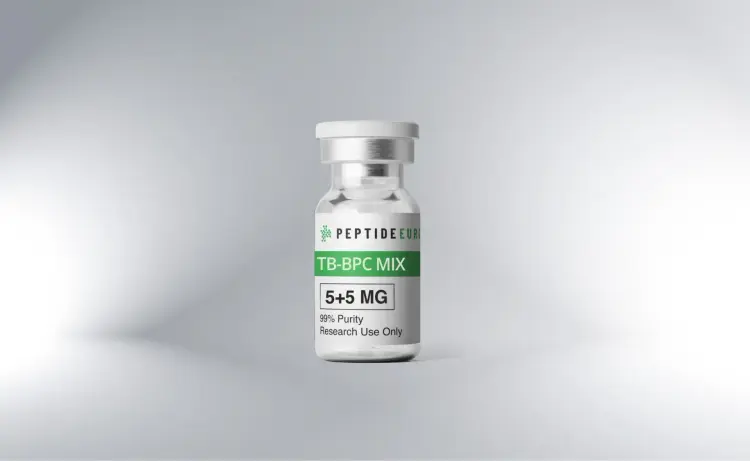
BPC-157 and TB-500: Research, Differences and Evidence Comparison
BPC-157 and TB-500 are two synthetic peptides that frequently appear together in discussions about peptide research, tissue-repair research and experimental recovery compounds. Searches for BPC 157 and TB 500, BPC 157 TB 500, BPC 157 vs TB 500, and TB 500 vs BPC 157 have grown as interest in experimental peptides has expanded.
Although the two compounds are often discussed as if they were interchangeable, they are chemically different and have different research histories. Understanding those differences is important when evaluating scientific literature.
This guide provides an evidence-focused overview of BPC-157 and TB-500, including what each compound is, how they differ, what research has investigated, and what remains unknown.
Important research-use note: BPC-157 and TB-500 should not be presented as approved medicines or as established treatments for injuries or medical conditions. PepEurope supplies its peptide products for laboratory and scientific research purposes and not for human or veterinary consumption.
What Are BPC-157 and TB-500?
BPC-157 and TB-500 are synthetic peptide compounds investigated in preclinical research.
Although they are frequently mentioned together online, they are not the same compound.
BPC-157
BPC-157 is a synthetic 15-amino-acid peptide that has been investigated primarily in laboratory and animal models.
Research has explored BPC-157 in areas including tissue response, gastrointestinal models, tendon and ligament models, blood-vessel-related processes and cellular signaling.
Much of the published research remains preclinical. A recent review of peptide research in sports medicine concluded that evidence for many emerging peptides remains substantially stronger in animal models than in rigorous human clinical trials.
TB-500
TB-500 is commonly described as a synthetic peptide related to thymosin beta-4 research.
One important distinction is that TB-500 should not automatically be treated as identical to full-length thymosin beta-4. Scientific discussions sometimes use evidence concerning thymosin beta-4 when discussing TB-500, but the molecules and research records need to be distinguished carefully.
The FDA has specifically noted that it did not identify published human clinical studies using TB-500 itself in its safety review, meaning that the human safety profile remains poorly characterized.
BPC-157 vs TB-500: What Is the Difference?
The simplest way to understand the difference is to consider them as two separate experimental peptides with overlapping areas of research interest.
| Feature | BPC-157 | TB-500 |
|---|---|---|
| Compound type | Synthetic peptide | Synthetic peptide/fragment associated with thymosin beta-4 research |
| Primary research | Mostly preclinical | Mostly preclinical |
| Research areas | Tissue response, gastrointestinal models, tendon and ligament models | Cell migration, tissue repair and wound-related research |
| Human evidence | Limited | Very limited for TB-500 itself |
| Approved medicine | No | No |
| Established clinical dosage | No | No |
| Suitable substitute for medical treatment | No | No |
The important point is that neither compound currently has the level of controlled human evidence required to establish it as a proven treatment for injury recovery.
A recent peer-reviewed review of peptide supplements and sports medicine found that most of the identified publications were preclinical animal studies and concluded that claimed musculoskeletal recovery benefits remain unsubstantiated by current human trials.
BPC-157 vs TB-500: Which Has More Research?
This is one of the most common questions behind the search term “BPC 157 vs TB 500.”
The answer depends on what type of research is being measured.
BPC-157 has a relatively substantial body of preclinical literature compared with TB-500. Studies have investigated BPC-157 in several animal models and biological systems.
TB-500 has a different research history, and some of the literature discussed in connection with it concerns thymosin beta-4 rather than the specific TB-500 material sold through research channels.
That distinction is essential.
Research involving a related or parent molecule cannot automatically be treated as evidence for another compound.
Consequently, simply counting studies does not establish that one peptide is clinically superior to the other.
BPC-157 Research
BPC-157 has attracted considerable scientific interest because of findings from laboratory and animal research.
Preclinical investigations have examined processes involving:
- tissue response
- cellular signaling
- vascular pathways
- tendon and ligament models
- gastrointestinal models
- wound-related processes
- bone and muscle research
These findings have generated hypotheses for further investigation.
However, preclinical findings should not be confused with established clinical efficacy.
A compound can produce an interesting result in a laboratory model without producing the same outcome in humans. Differences in biology, metabolism, dosage, delivery, disease mechanisms and study design can all affect whether laboratory findings translate into clinical medicine.
For this reason, BPC-157 remains an experimental research compound rather than an established medical treatment.
TB-500 Research
TB-500 is also discussed extensively within experimental peptide research.
Research interest surrounding TB-500 is connected to biological processes such as cellular movement and tissue-related responses. However, the evidence base requires careful interpretation because research involving full-length thymosin beta-4 is sometimes used to support claims about TB-500.
These compounds should not automatically be treated as identical.
The FDA’s 2026 review materials specifically stated that no clinical studies or human exposure data using TB-500 through any route had been identified, and therefore potential human safety risks remained unknown.
This makes it particularly important for researchers and readers to check the exact compound used in a study before drawing conclusions.
BPC-157 and TB-500 Together
The phrase “BPC-157 and TB-500” is frequently used online because the two compounds are often discussed together.
This has led to terms such as “BPC-157 TB-500 stack” appearing across peptide communities.
However, popularity does not establish scientific effectiveness.
There is currently insufficient human clinical evidence to conclude that combining BPC-157 and TB-500 produces a particular therapeutic outcome.
A combination of two experimental compounds also creates additional scientific questions, including:
- How do the compounds interact?
- Are their pharmacological effects additive?
- Could their effects overlap?
- What are the short-term risks?
- What are the long-term risks?
- What dose would be appropriate in a clinical setting?
- How would researchers monitor adverse effects?
These questions require controlled research rather than anecdotal reports.
BPC-157 vs TB-500: Mechanisms of Interest
Another useful way to compare the compounds is to examine the biological mechanisms being investigated.
BPC-157 research has explored pathways involving cellular signaling, vascular responses and processes associated with tissue models.
TB-500 research is associated with thymosin-beta-4-related biology, including processes involving actin and cellular migration.
The proposed mechanisms are therefore not identical.
This is one reason why describing BPC-157 and TB-500 simply as “the same type of healing peptide” is scientifically incomplete.
Mechanistic findings are also not proof of clinical effectiveness. Demonstrating that a compound influences a biological pathway does not necessarily demonstrate that it improves a medical outcome in people.
TB-500 vs BPC-157: Is One Proven to Be Better?
The keyword “TB 500 vs BPC 157” implies a direct head-to-head comparison.
At present, the available evidence does not justify declaring one compound clinically superior.
BPC-157 has a larger body of preclinical research, while TB-500 has a different evidence history involving thymosin-beta-4-related research. But neither should be described as a proven human recovery treatment.
The most scientifically responsible comparison therefore focuses on:
- What the compounds are.
- What models have been studied.
- What mechanisms researchers have proposed.
- Whether studies involved animals, cells or humans.
- Whether the exact compound was investigated.
- What safety information exists.
- What remains unknown.
This approach provides a much more useful comparison than simply asking which peptide is “better.”
Human Evidence: What Do We Actually Know?
Human evidence is one of the most important considerations when evaluating experimental peptides.
Many online discussions focus heavily on animal studies, laboratory experiments and personal experiences.
These sources can be useful for generating research hypotheses, but they do not provide the same level of evidence as well-designed controlled human clinical trials.
A 2026 review of peptide supplements in sports medicine reported that approximately two-thirds of identified publications used preclinical animal models and concluded that claimed musculoskeletal recovery benefits for emerging peptide supplements remain unsubstantiated by current human trials.
This distinction should remain central when evaluating both BPC-157 and TB-500.
Safety and Regulatory Considerations
Regulatory status is particularly important for anyone researching BPC-157 and TB-500 in Europe.
There is no single simple “European approval” status that can be applied to every peptide product and every country. Medicinal-product regulation and enforcement can involve EU-level frameworks as well as national authorities.
For example, an EU food-safety notification from 2026 identified BPC-157 and a thymosin beta-4 fragment (TB-500) in a report concerning food supplements that were not authorised in the EU.
National regulatory treatment can also differ. A Finnish regulatory notification, for example, lists BPC-157 among substances considered within its national regulatory framework.
Therefore, researchers should always verify the rules applicable to the specific country in which a product is being used, supplied or studied.
Why Product Identity and Testing Matter
For laboratory research, accurate compound identification is essential.
A research material should be evaluated according to appropriate analytical documentation rather than relying solely on product names or marketing descriptions.
Useful documentation may include:
- Certificate of Analysis (CoA)
- HPLC testing
- Mass spectrometry
- Batch identification
- Purity information
- Storage specifications
- Manufacturing information
PepEurope states that applicable products are supported by quality-control testing and that Certificates of Analysis can provide information concerning purity, identity and testing.
Researchers should still evaluate the documentation for the specific product and batch rather than assuming that every product carrying the same name has identical characteristics.
BPC-157 and TB-500: Common Research Questions
Is BPC-157 the same as TB-500?
No. They are different synthetic peptide compounds with different chemical structures and research histories.
What is BPC-157 researched for?
BPC-157 has primarily been investigated in laboratory and animal research involving tissue response, gastrointestinal models, tendon and ligament models, vascular pathways and cellular signaling.
What is TB-500 researched for?
TB-500 is associated with research into thymosin-beta-4-related biological processes, including cellular movement and tissue-related mechanisms.
Is TB-500 the same as thymosin beta-4?
They should not automatically be treated as identical. Research involving full-length thymosin beta-4 should be distinguished from research involving the specific TB-500 material being discussed.
Is BPC-157 approved as a medicine?
BPC-157 does not have an established approved medicinal indication based on the evidence reviewed for this article.
Is TB-500 approved as a medicine?
TB-500 does not have an established approved medicinal indication based on the evidence reviewed for this article.
Can BPC-157 and TB-500 be considered proven recovery treatments?
No. Current human evidence is insufficient to establish either compound as a proven treatment for injury recovery.
Why are BPC-157 and TB-500 often discussed together?
They are both experimental peptides frequently discussed in online research, fitness and peptide communities, particularly in relation to tissue and recovery research. Their popularity does not establish clinical effectiveness.
BPC-157 vs TB-500: A Research-Based Summary
BPC-157 and TB-500 are scientifically interesting compounds, but the available evidence needs to be separated from online marketing claims.
BPC-157 has attracted substantial interest from preclinical research, particularly in animal and laboratory models examining tissue-related biological processes.
TB-500 has a different research background and is frequently discussed in connection with thymosin beta-4 biology. However, evidence involving the parent or related molecule should not automatically be transferred to TB-500 itself.
For researchers comparing BPC 157 vs TB 500, the most important consideration is therefore not which compound has the strongest online reputation.
Instead, examine the quality and type of evidence available for the exact compound.
The current literature continues to contain important evidence gaps, particularly concerning controlled human research and long-term safety.
Research Materials from PepEurope
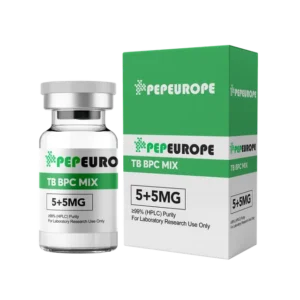
PepEurope focuses on supplying peptide materials for laboratory and scientific research. The company states that its peptides are intended exclusively for research purposes and are not intended for human or veterinary use.
For researchers evaluating peptide materials, product identity, analytical testing, batch documentation and appropriate laboratory handling are important considerations.
Before purchasing or working with any research compound, researchers should also confirm that its use, importation, storage and possession comply with the regulations applicable in their country.
Final Thoughts
The growing interest in BPC-157 and TB-500 makes accurate information increasingly important.
Both compounds have generated significant scientific and online interest, but their research evidence should not be overstated. BPC-157 has a substantial preclinical literature, while TB-500 has a distinct and more limited evidence base that must be separated from research involving full-length thymosin beta-4.
For anyone searching BPC 157 TB 500, BPC 157 vs TB 500, or TB 500 vs BPC 157, the key takeaway is simple: compare the actual scientific evidence, identify the exact compound studied, distinguish laboratory findings from human clinical evidence, and verify the regulatory requirements applicable to your country.
That approach provides a more reliable foundation for understanding experimental peptide research than marketing claims or anecdotal experiences.
Reviews
There are no reviews yet.