
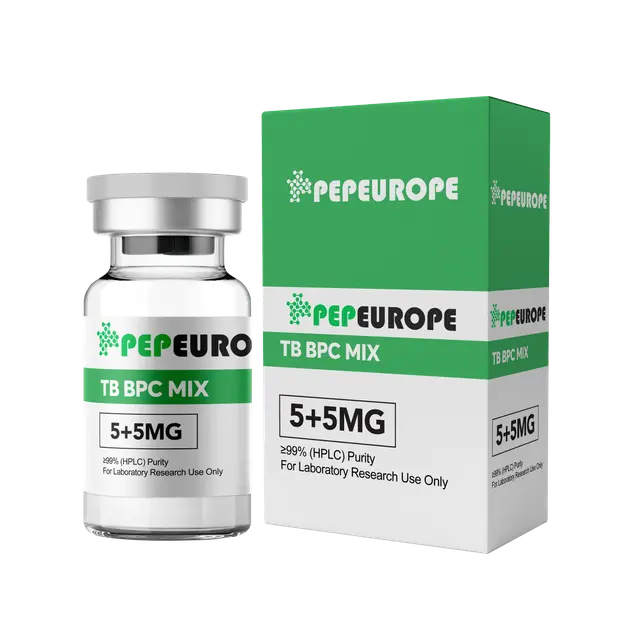
Buy TB500 in Europe: TB-500 Peptide Research Guide
TB500, also written as TB-500 peptide or TB 500, is a synthetic peptide commonly discussed in laboratory research involving thymosin beta-4 and biological processes associated with tissue repair, cellular migration and regeneration. Interest in TB-500 has grown considerably among researchers investigating peptide biology and related mechanisms.
For European audiences searching for buy TB500, TB500 peptide, TB 500 peptide, or TB500 dose, it is important to understand exactly what TB-500 is, what the available evidence shows, and how its regulatory status differs from that of approved medicines.
PEP Europe provides information and research-oriented resources for people interested in peptide science. TB-500 should not be confused with an authorised medicine, dietary supplement or established human treatment.
What Is TB-500?
TB-500 is commonly described as a synthetic fragment or analogue associated with thymosin beta-4, a naturally occurring peptide present in humans and other organisms.
The terminology surrounding TB-500 can be confusing. Commercial and online sources sometimes use “TB-500,” “thymosin beta-4,” and “TB4” interchangeably even though these terms can refer to different molecular materials.
This distinction matters when evaluating scientific literature.
TB-500 is generally discussed as a research compound rather than an approved pharmaceutical product. Current evidence assessments describe TB-500 as an unapproved research substance, with no marketing authorisation for therapeutic use.
For that reason, researchers should pay attention to the exact identity, molecular form and analytical documentation of any material being evaluated.
TB 500 Peptide: Understanding the Terminology
The phrase TB 500 peptide is frequently used online to describe materials associated with thymosin beta-4 research.
However, a keyword or commercial name does not establish that two products contain the same molecular substance.
Thymosin beta-4 is a naturally occurring 43-amino-acid protein, while TB-500 is commonly described as a synthetic fragment associated with a specific region of thymosin beta-4.
Scientific and regulatory sources therefore distinguish between the parent molecule and the TB-500 fragment.
For researchers, this distinction is particularly important when interpreting published studies. Results involving full-length thymosin beta-4 should not automatically be assumed to demonstrate the same effects for a TB-500 fragment.
What Does Research Say About TB-500?
Research surrounding TB-500 and thymosin beta-4 has attracted attention because of the biological functions associated with thymosin beta-4.
Preclinical research has investigated mechanisms involving cellular migration, actin regulation, angiogenesis and tissue-related biological processes. However, the amount and quality of evidence varies considerably depending on the specific compound, experimental model and outcome being studied.
A major limitation is that evidence involving the full-length thymosin beta-4 molecule cannot automatically be transferred to TB-500.
Current evidence assessments describe the certainty surrounding TB-500 as very low and classify it as an unapproved research compound.
Consequently, researchers should distinguish between:
- laboratory findings;
- animal research;
- research involving full-length thymosin beta-4;
- early human research involving related compounds; and
- evidence specifically involving TB-500.
These are not interchangeable categories.
TB500 Dose: What Researchers Should Know
“TB500 dose” is an important search term, but it should not be interpreted as evidence that an established human dosage exists.
There is no universally established, regulator-approved human dosing regimen for TB-500. Because TB-500 does not have marketing authorisation as a medicine in the European Union, there is no approved therapeutic dosing schedule that can be presented as a standard European dose.
Online websites may publish different schedules or quantities. Such information should not be treated as an established medical dosing standard.
Researchers should instead focus on the experimental design of individual studies, including the exact material investigated, model used, concentration, exposure conditions and analytical methods.
This distinction is especially important when comparing research performed in laboratory or animal models with claims made about human use.
TB-500 vs Thymosin Beta-4
One of the most common sources of confusion is treating TB-500 and thymosin beta-4 as identical substances.
They are related, but researchers should examine the actual compound used in a study before drawing conclusions.
Thymosin beta-4 is the naturally occurring parent protein. TB-500 is commonly described as a synthetic fragment associated with thymosin beta-4.
This difference can affect how research findings should be interpreted.
A study involving thymosin beta-4 therefore should not automatically be presented as a clinical study of TB-500.
This is one reason PEP Europe recommends looking beyond product names and examining analytical information and the original scientific literature.
Is TB-500 Approved in Europe?
As of 2026, available regulatory information indicates that TB-500 does not hold European Union marketing authorisation as a medicinal product.
The FDA’s published evaluation states that no products containing TB-500 have been authorised for use in the European Union by the European Medicines Agency.
An independent 2025 regulatory assessment similarly identifies TB-500 as an unapproved research supply rather than an authorised medicine.
European regulations can also differ between jurisdictions, so researchers should verify the rules that apply in their specific country rather than assuming that the regulatory position is identical throughout Europe.
The phrase “research use only” should therefore not be interpreted as pharmaceutical approval or permission for human therapeutic use.
Why Research Quality Matters
When evaluating a TB500 peptide research material, the name printed on a vial is not enough to establish its identity or quality.
Researchers should consider documentation such as:
- batch-specific analytical results;
- analytical purity;
- identity testing;
- measured molecular mass;
- batch or lot identification;
- manufacturing information;
- storage documentation; and
- appropriate laboratory handling information.
A purity percentage alone does not necessarily establish molecular identity.
For example, an analytical result can indicate the relative purity of a sample without answering every question about whether the material is the expected molecular form.
This is why appropriate analytical documentation is an important part of responsible peptide research.
TB500 and Scientific Research
Interest in TB-500 has developed alongside broader scientific interest in thymosin beta-4 and peptide biology.
Researchers studying this area may investigate questions involving:
- cellular migration;
- tissue biology;
- extracellular matrix interactions;
- angiogenic mechanisms;
- actin-related cellular processes;
- wound-healing models;
- regeneration-related pathways; and
- peptide structure and activity.
However, the presence of a biological mechanism does not automatically establish a clinically useful treatment.
A strong research page should therefore separate biological plausibility from demonstrated clinical efficacy.
That distinction is particularly important for experimental peptides such as TB-500.
TB-500 and Human Evidence
Another important consideration is the difference between research on TB-500 itself and research on thymosin beta-4.
Some human studies have investigated full-length thymosin beta-4 or related formulations. Those studies should not automatically be described as human clinical trials of the commercially marketed TB-500 fragment.
Available evidence assessments report that TB-500 itself remains an unapproved research compound and that the evidence base is limited.
For this reason, claims about human outcomes should be evaluated carefully and traced back to the exact molecule and formulation used in the underlying research.
Why People Search for “Buy TB500”
The phrase buy TB500 indicates strong commercial search intent, but search intent and regulatory status are two different issues.
Someone searching this phrase may actually be looking for:
- TB-500 scientific information;
- peptide specifications;
- research material;
- regulatory information;
- TB-500 versus thymosin beta-4 comparisons;
- analytical documentation; or
- information about current European availability.
A high-quality SEO page can address these different intents without making unsupported therapeutic claims.
For PEP Europe, this approach also creates opportunities to rank for longer-tail searches such as TB-500 peptide research, TB500 peptide Europe, TB 500 peptide, TB500 dose information, and TB-500 regulatory status.
Frequently Asked Questions About TB500
What is TB500 peptide?
TB-500 is commonly described as a synthetic peptide fragment associated with thymosin beta-4. It is primarily discussed in the context of experimental and laboratory research rather than as an approved therapeutic medicine.
Is TB-500 the same as thymosin beta-4?
No. The names are sometimes used interchangeably online, but researchers should distinguish between full-length thymosin beta-4 and TB-500, which is commonly described as a synthetic fragment.
Is TB-500 approved in Europe?
Current available regulatory information indicates that TB-500 does not have European Union marketing authorisation as a medicinal product.
What is the TB500 dose?
There is no regulator-approved standard human TB-500 dosage. Online dosing schedules should not be treated as established medical guidance. buy tb500
Is TB-500 a research peptide?
TB-500 is generally classified and supplied in research contexts as an unapproved research compound.
Is TB-500 the same as TB4?
TB4 commonly refers to thymosin beta-4, while TB-500 is generally used for a synthetic fragment associated with thymosin beta-4. Researchers should verify the exact molecular identity rather than relying solely on terminology.
What should researchers look for when evaluating TB-500?
Researchers should consider identity, analytical testing, batch documentation, purity, molecular mass and other relevant quality-control information. buy tb500
PEP Europe and Peptide Research
PEP Europe aims to provide clear information about peptide research while maintaining a strong focus on transparency and responsible scientific communication.
For compounds such as TB-500, that means distinguishing experimental research from approved medical treatment and avoiding unsupported claims about therapeutic effects.
Anyone researching TB-500 should consult current scientific literature and applicable national and European regulations before conducting research involving the compound.
Conclusion
TB500 remains a subject of significant interest within peptide research, but its scientific and regulatory status should be understood carefully.
The terms TB500, TB 500 peptide, TB500 peptide, and thymosin beta-4 are often used together online, yet they can refer to different molecular materials. Understanding those distinctions is essential when evaluating research.
For European researchers searching for buy TB500, the most important considerations extend beyond availability. Molecular identity, analytical documentation, evidence quality and applicable regulations should all be considered.
TB-500 currently has no EU marketing authorisation as an approved medicinal product, and there is no established regulator-approved human TB500 dose.
PEP Europe focuses on transparent, research-oriented information so visitors can better understand peptide science, terminology and the current evidence surrounding compounds such as TB-500.
Reviews
There are no reviews yet.